|
PROJECT TITLE: Does Crossed Hand/Eye Dominance Affect Basketball Free Throw Shooting Percentage? |
||
|
AUTHOR: Wade Johnson |
DATE: November 7, 2011 |
|
|
RESEARCH CATEGORY: Biological Sciences B |
||
|
HSHS INSTRUCTOR/MENTOR: Doug Greenberg |
COURSE NAME: Honors Biology |
PERIOD: 3 |
|
A. |
ABSTRACT:
The idea that a person is either right-handed or left-handed when performing certain tasks is a common notion. That means that one hand is preferred (or dominant) over the other when performing tasks. Did you know that everyone has a dominant eye as well? A person’s dominant eye is the eye that processes and transmits information to the brain faster than the other eye does and guides the movements of the other eye. (1) The concept of knowing which eye is a person’s dominant eye and to the extent they rely on the dominant eye in certain situations is not as well known. Most people use both eyes together when performing a task and don't give much thought to situations where it might make a difference if they use the dominant eye to perform a task versus using the non-dominant eye.
This project is designed to look for the consequences of having the dominant hand and eye on the same side of the body (uncrossed dominance) compared to having the dominant hand and dominant eye on opposite sides of the body (crossed dominance) when shooting basketball or perhaps performing another task where hand-eye coordination is important.
|
|
B. |
PROBLEM: My problem is to determine whether crossed hand/eye dominance helps or hurts a player when shooting basketball free throws.
|
|
C. |
HYPOTHESIS:
If a player possesses crossed hand and eye dominance (having dominant hand and dominant eye on opposite sides of the body), then they will have a higher free throw shooting percentage than a player who has uncrossed hand and eye dominance (having dominant hand and eye on SAME side of the body).
|
|
D. |
LIST OF MATERIALS:
25 volunteers
Basketball
Basketball court
Hand and Eye Dominance survey form
Notebook
EXPERIMENTAL DESIGN:
1. I selected 25 volunteers to shoot free throws. The volunteers were around the same age and had about the same experience playing basketball.
2. I determined each volunteer’s hand dominance by asking each one which hand they write with or shoot a basketball with and recorded data on my survey form.
3. I determined each volunteer’s eye dominance by giving them a camera and asking them to look through the viewfinder. I recorded which eye they used on my survey form.
4. To ensure their eye dominance, I also asked them to do a simple eye test by holding out their hands to make a triangle between their thumbs and first knuckles. With both eyes open and looking through the triangle, I asked them to find an object and center it in the triangle. Then, they close one eye and look through the triangle with the open eye to see if the object is still in view or if it’s disappeared. If they close their right eye and see the object with their left eye, then they’re left eye dominant. If they close their left eye and still see the object within the triangle, they’re right eye dominant. (2)
5. I had the volunteers shoot 10 free throws using the basketball
6. I recorded the number of free throw shots each volunteer made out of 10 shots taken.
7. At the end, I calculated each volunteer’s free throw shooting percentage out of 10 shots (ex. 7/10 = 70%)
EXPERIMENTAL DESIGN DOCUMENTATION:
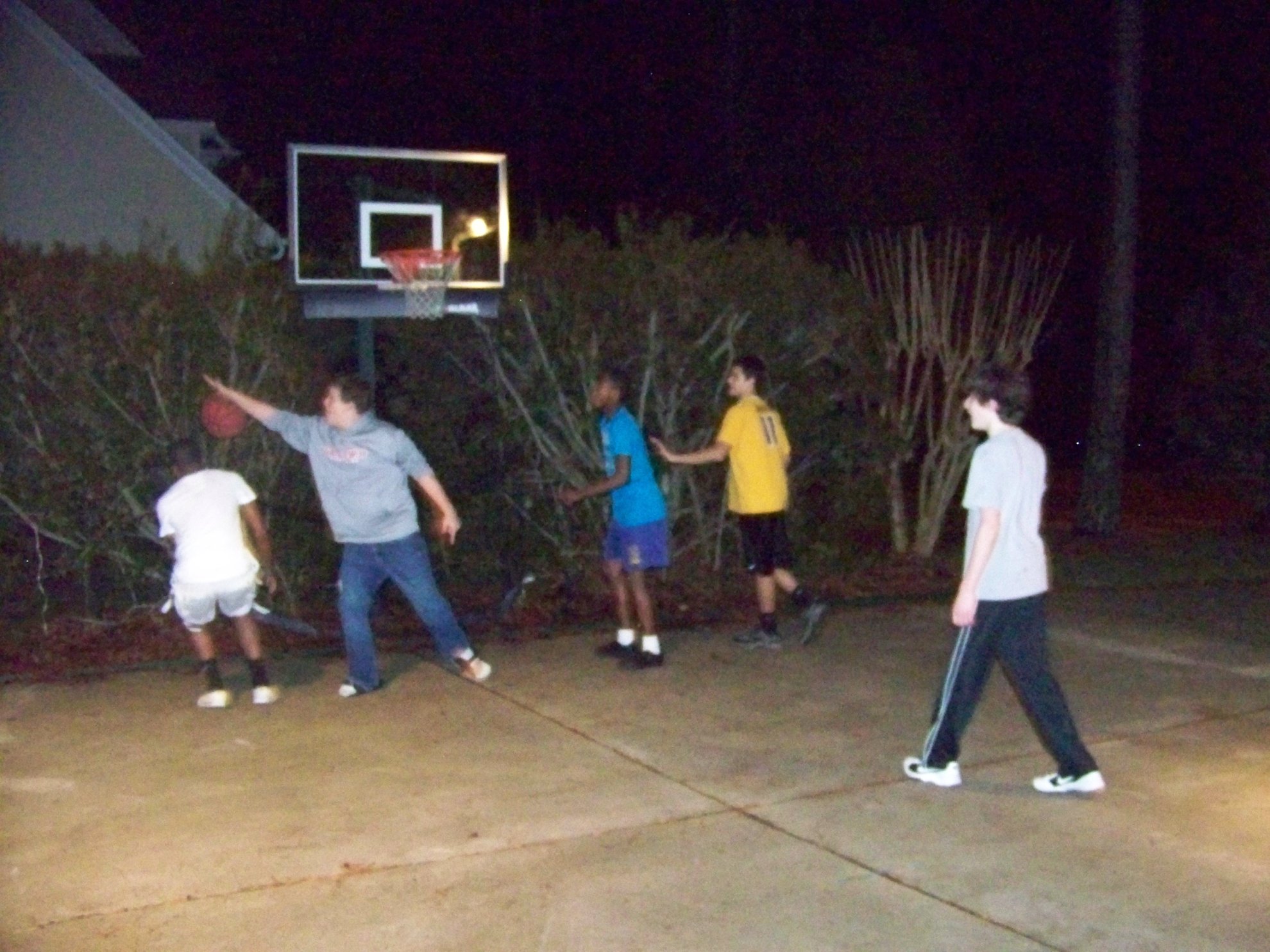
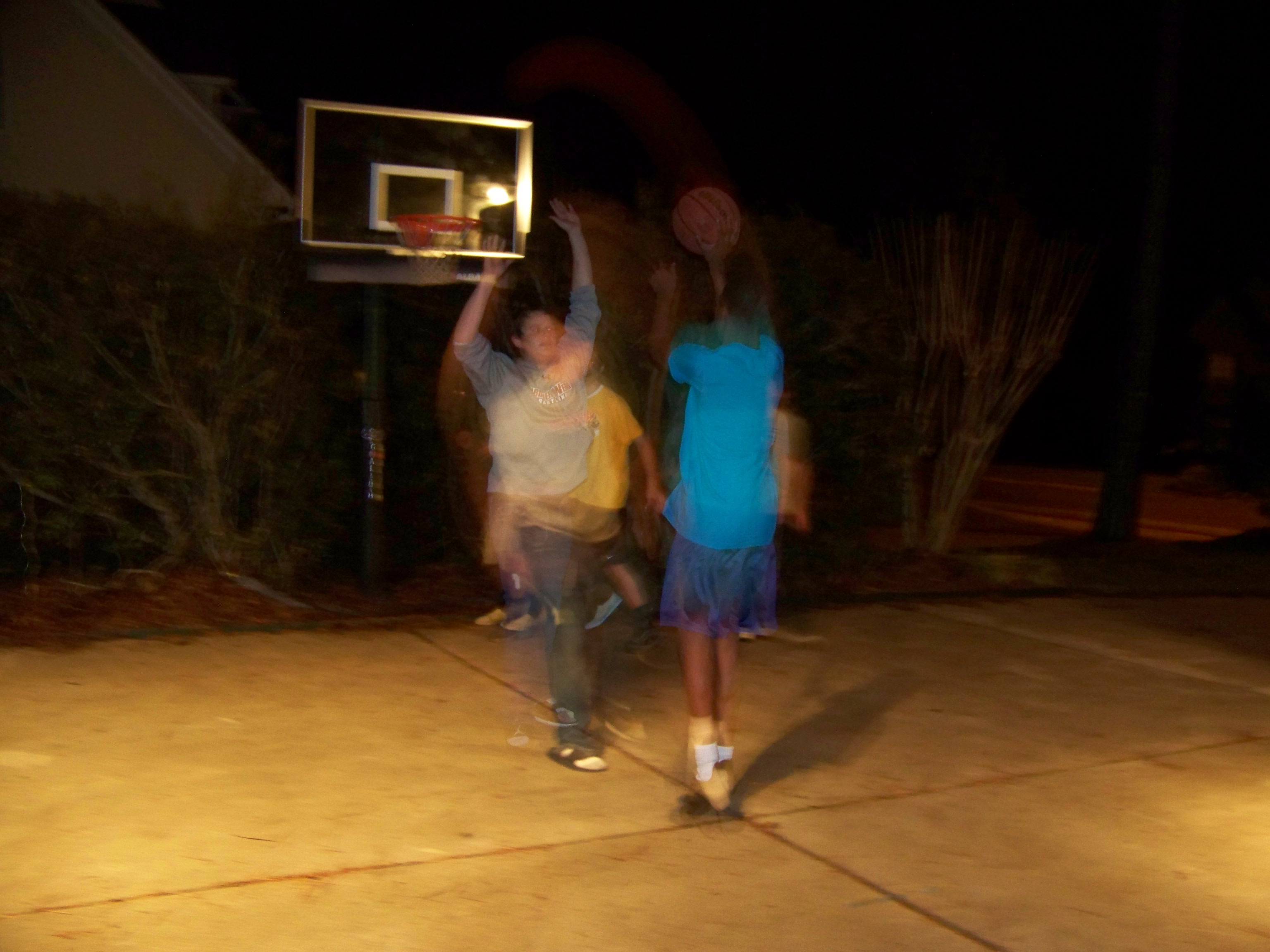
Volunteers shooting free throws (photos 1 and 2)

|
E. DATA TABLE: INSERT A VERY CLEAR TABLE SHOWING ALL DATA COLLECTED, UNITS, LABELS
|
GRAPH: INSERT AN APPROPRIATE GRAPH SHOWING THE
RELATIONSHIP BETWEEN VARIABLES, AXIS LABELS, UNITS OF MEASUREMENT, A LEGEND,
AND A KEY IF APPLICABLE.

|
shooting line graph.docx Size : 19.592 Kb Type : docx |
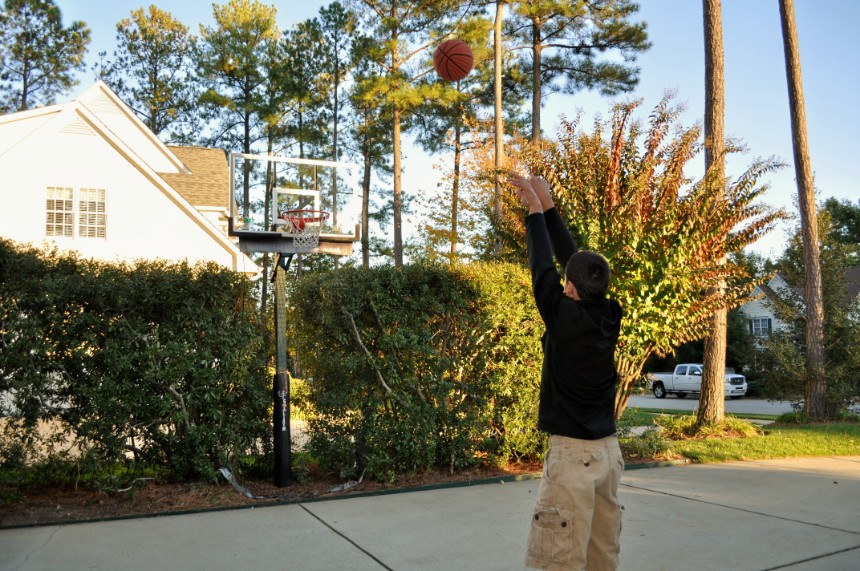
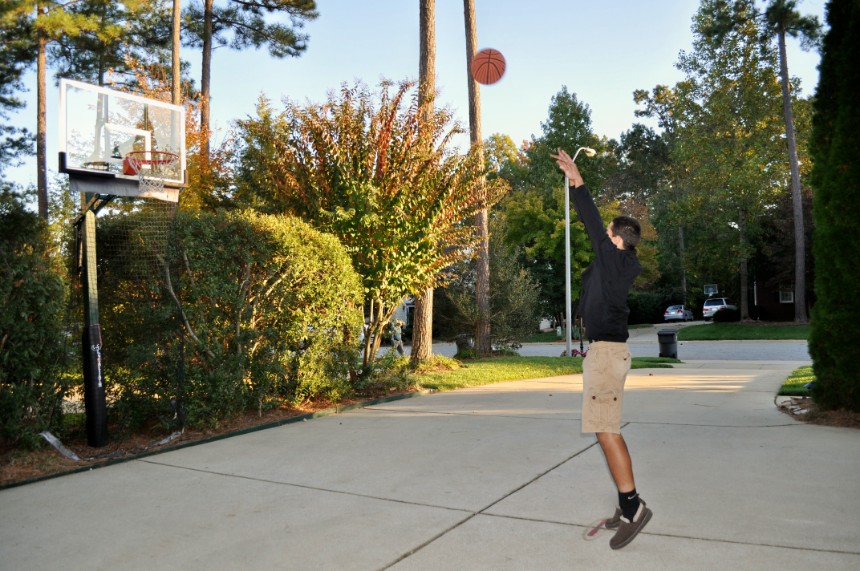
EVIDENCE OF AUTHENTICITY: INSERT CLEAR PICTURES/VIDEOS OF YOU DOING THE EXPERIMENT
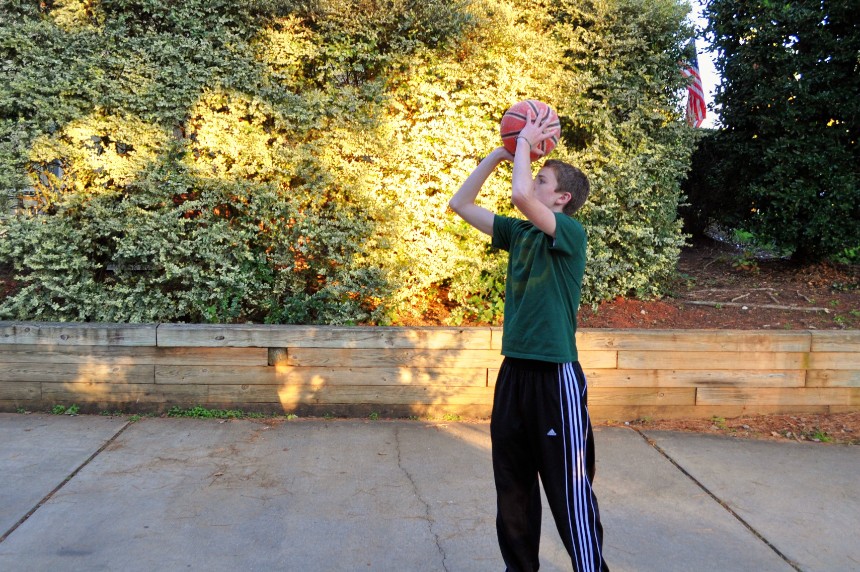
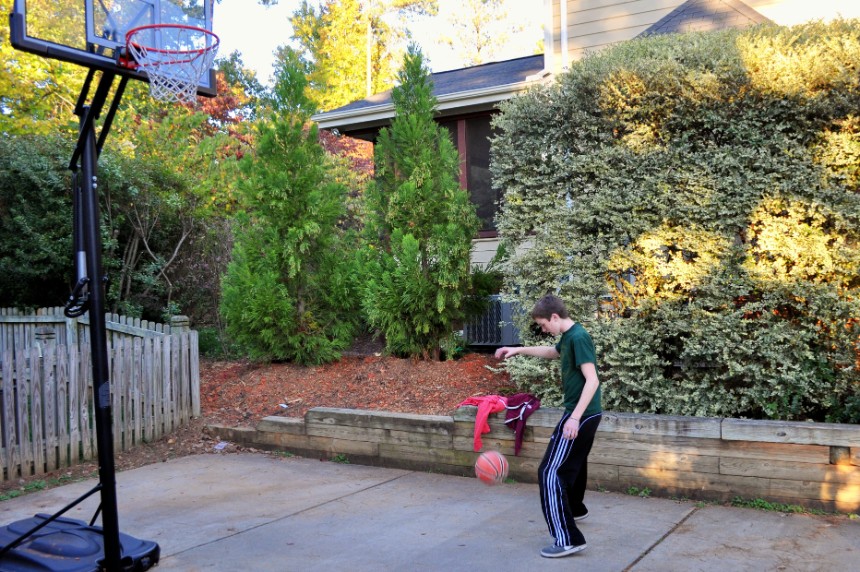
|
F. |
DATA ANALYSIS: When shooting basketball free throws, players often hold the ball up at face-level when setting up for a shot. However, when players are in this position, the ball easily partially blocks the eye on the same side of the body as the shooting hand. For shooters with uncrossed hand and eye dominances (same side eye and hand dominance), their view of the net from their dominant eye is partially blocked by the ball. Yet for players with crossed hand and eye dominances (where the hand and eye dominances are on opposite sides from each other), their view of the net is unobstructed by the ball because their non-dominant eye was the one blocked by the ball leaving the dominant eye with a clear view of the net. Based on the explanation above, you may conclude that players with crossed hand and eye dominance would make more free throw shots than players with uncrossed hand and eye dominance. However, the therapists at Learning Link Technologies observed that having crossed hand and eye dominance usually causes people to have spatial or depth perception issues. (3) They found that kids who have crossed hand and eye dominance are usually great athletes, but they tend to pick lateral sports (sports that don’t require them to cross the vertical midline of their bodies) such as soccer and track because crossing the vertical midline feels very uncomfortable to them.
|
|
G. |
CONCLUSION: ENTER A CONCLUSION THAT REFLECTS ON YOUR DATA AND ADDRESSES YOUR HYPOTHESIS First, I discovered that crossed hand and eye dominance is not as common as uncrossed hand and eye dominance. In conclusion, crossed hand and eye dominant volunteers scored higher on average than the volunteers who had uncrossed hand and eye dominance. A person having crossed hand and eye dominance (such as dominant right handed with dominant left eye) seems to have a positive effect on free-throw shooting percentages. It is said that usually a person becomes well adapted and works well the way they are. Yet in my data, volunteers that had crossed hand-eye dominance shot a total of 60% compared to the 56% shot by volunteers with uncrossed hand-eye dominance. In data terms that 4% can make a huge difference in the game of basketball. In conclusion,
my experiment determined that crossed hand-eye dominant basketball players are
better free shooters than those players who are uncrossed hand-eye
dominant. This experiment showed that having
crossed hand-eye dominance helps a player when playing basketball, but it may
not have the same results in other sports.
|
|
H. |
WORKS CITED: (http://citationmachine.net/ or http://www.easybib.com/) 1. Kluka, D. A., Ph.D., and Knudson, D., Ph.D., April 1997. “The Impact of Vision and Vision Training on Sports Performance,” Journal of Physical Education, Recreation and Dance, April 1997. http://www.sportsci.org/news/ferret/visionreview/visionreview.html
2. Archeryweb.com, date unknown. "Determining Your Dominant Eye," archeryweb.com; http://www.archeryweb.com/archery/eyedom.htm
3. http://www.learning-aids.com/mixed-dominance-and-learning-disabilities
|
